
Disability is the Current Meta
one more time: human behavior is the product of incentives

Folks! The Neuromancer book club starts tomorrow evening. Read all about it here. The first reading assignment will be in that post, so it’s not too late to get involved. Make sure you check the instructions for how to receive the book club emails. I’m excited.
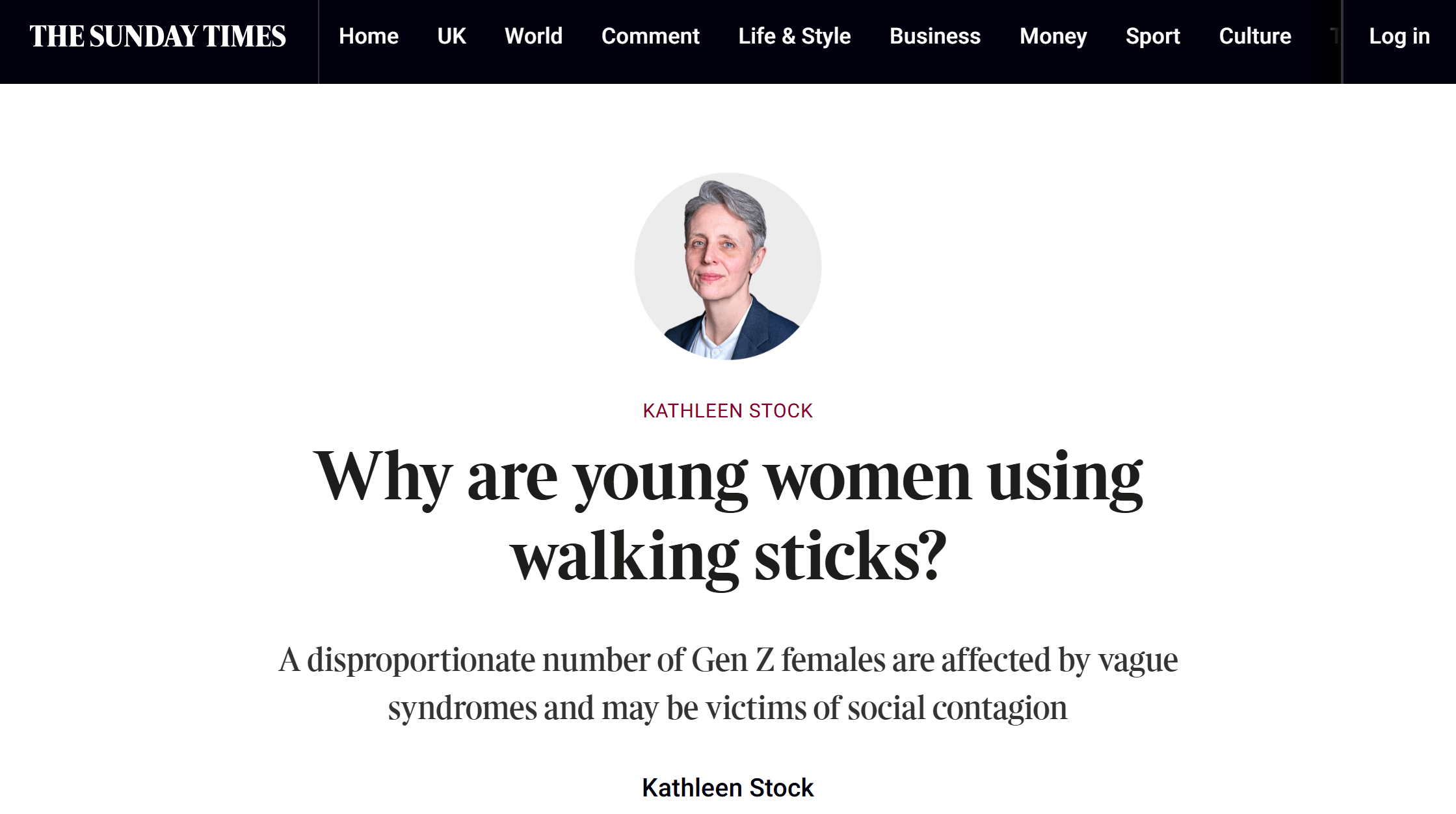
The answer to Ms. Stock’s question is not particularly complicated: human behavior is the product of incentives and the limitations imposed by social boundaries. And right now, in polite progressive society, we’ve given people direct and obvious incentives to claim to have a disability and we’ve declared all boundaries stigmatizing. The outcomes are exactly what you’d expect.
Disabilities hurt, they disable; they is definitionally true. That this has become a matter of controversy shows just how bizarre modern disability discourse has become. A chapter of my new book is titled “Disability is Bad,” which ten years ago I would not have ever thought to have to argue. I am not disabled and do not particularly even like saying that I have a disability, but legally, formally, I have a disability. And it sucks. My disability has ruined my life. I need no lectures from anyone about how much real disability can hurt. But disability status? That’s something different. Claiming to have a disability is a cheat code, here in 2026, both a shortcut and a way to throw your weight around, a claim of entitlement to sympathy, attention, and accommodation. Seeking disability accommodation is usually a matter of pursuing basic human needs in a manner consistent with law, human rights, and simple compassion. But too often, today, it’s also a special way to go about obtaining social deference in a world absolutely stacked with people seeking it. Unlike most identity demands, those associated with disability are frequently backed with legal force; this is the influence of the Americans with Disabilities Act, a commendable law that has led to an enormous number of bad consequences, including the army of lawyers who do nothing but push impressionable people to file utterly frivolous discrimination lawsuits. The particular cohort Stock describes, the Cane Gang, that ballooning group of recently-unimpeded and fashionable young women who suddenly adopt mobility devices at rates previously unheard of among young and otherwise healthy people, though? It’s not monetary damages they’re after. No, they want something more valuable than money, at least to them: they want to be seen.
And the trouble is, most people seem afraid to be honest about any of this. Because even with AOC now casting aspersions on Woke 1.0, even with all of the post-2024 reverberations, the thawing of language norms, the rehabilitation of the word “retard,” the whole litany, polite society is still afraid to question disability. Disability activists are the most relentless and vicious that I’ve fought with, and I’ve fought with many. The ever-present threat of lawsuit cows organizations into positions of deference and capitulation. (Special education funding is badly straining the finances of many school districts, but I’ve been told by many who work in public education that fighting affluent and motivated parents who are suddenly demanding accommodations for students who never needed them before is not worth the potential trouble.) Many who hear someone invoke disability preemptively decide that they don’t want to get mixed up in any controversy. This persistence of the fear of giving offense, in an era where much of that fear has dissolved, has not gone unnoticed. People like having the upper hand in social situations, and in the online era opportunities for those situations have multiplied exponentially. Again, behavior is a product of incentives; right now, there are direct incentives to claim disability status, and the gatekeeping and authority that once would have functioned as a counterweight have been declared stigmatizing, incompetent, corrupt, or all three. Unsurprisingly, the number of people claiming this status grows and grows.1
Disability is the new identity meta. For a certain kind of competitor in the great game of attention, deference, and sympathy, a game which ambitious young people now play with all the zeal and ambition that they once pursued Ivy League acceptance letters and popularity, it’s the new winning strategy, the smartest way to play. The risks of facing skepticism are low, thanks to loosening diagnostic criteria and the ballooning definition of “stigma,” while the social rewards are many. And there’s always a hot new disorder to claim. The reaction to Stock’s essay - people are big mad about it - shows why disability can appear so alluring to the frivolous: because they want the upper hand. There’s this baseline reality of what we call identity, some truth somewhere out there, and then online there’s a battleground on which various combatants try to seize the brass ring of speaking with the most authority, of inspiring the most deference. The idea is to be the kind of person who people don’t question. Attention, yes, sympathy, yes, a leg up on the competition, sure. But also, to make skepticism seem very expensive.
Meanwhile, people who actually can’t walk still go through life on a perpetual obstacle course, a world of constant unavoidable exertion and perennial minor risks, unfortunate enough to need a cane as a cane and not as a fashion statement. And every last frivolous demand for disability status pulls time, attention, resources, and public sympathy away from them and their needs.
Some years ago, at a publishing industry conference, I was talking about Jetway Jesus with some people I didn’t really know. If you’re unfamiliar, “Jetway Jesus” is the term that those in the airline business use to refer to those passengers who request wheelchairs when they arrive at the airport and who then, on reaching their destination, miraculously rediscover their ability to walk. Often those who claimed to need disability accommodation before takeoff can be seen carrying heavy suitcases or running towards taxis after landing. It’s been the subject of flight attendant and gate agent jokes for many years.
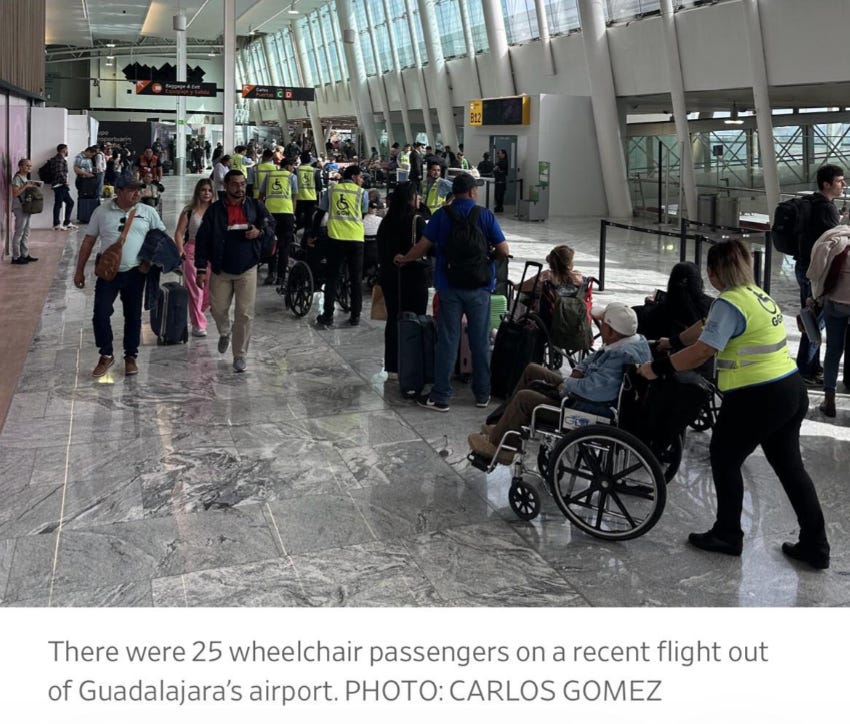
Why does this happen? Well, there are some people with legitimate disabilities who rely on wheelchairs who can nevertheless walk for short periods, and certainly some of them pass through airports. This is why temporary wheelchair accommodations are necessary, for the legitimately disabled, elderly, or infirm. But though there are those who would demand that we must end the conversation there, who insist that because some legitimate uses of airport wheelchairs exist we must never allege misuse, most of these cases are fraudulent. Most of the time the Jetway Jesus phenomenon happens because airlines generally don’t have any sort of vetting procedure for passengers who request wheelchairs; the potential for ADA suits is too great to risk, which is true in all manner of contexts, and anyway the potential for bad PR is prohibitive. So that’s the degraded standards and gatekeeping I mentioned. Meanwhile, getting a wheelchair typically lets you skip the security line and board the plane first. So there’s the incentive. And a lot of people in the world are shameless and immoral and want to skip the lines and so they lie and say that they need a wheelchair when they don’t. This tendency of people to demand wheelchairs for departures but not on arrival is, I stress, a remarkably common occurrence, which is what we should expect when we create incentives and then remove authority and rules. I explained this in the conversation at the publishing conference. And someone was unhappy about it.
This woman made a claim that I encounter all the time and frankly find baffling: the insistence that to suggest that people frequently fake disabilities for their own selfish reasons is to disrespect people with real disabilities. As I said at the time, this is very crooked logic; few would argue that criticizing Rachel Dolezal for her racial cosplay would amount to disrespecting Black people. Surely, to point out that some people fake disabilities is not to deny the difficulty or social salience of living with actual disabilities. Indeed, I would argue, have argued, that forcefully rejecting fake disabilities is an essential part of preserving the accommodations we make for the disabled as a society. Airport wheelchair access has gotten harder to secure as more and more people take advantage of it, which surely means that people with real mobility issues are facing more hassle thanks to frivolous use. (You see, in real life, access issues are often zero sum.) But nobody would ever do that, she said, nobody would ever fake disability!, another claim I hear very often that just astounds me. So I said, look, and I pulled out my cellphone. I went to a prominent forum for travel tips. In that forum I showed her several threads that praised the “hack” of lying your way into a wheelchair to skip onerous lines at the airport. It’s a thing and has been for a long time.
She said, well, that’s a rare and specific case. But people lie about this stuff constantly. Those looking for sympathy fake cancer all the time, I said. The number of disability accommodations given for the LSAT is exploding and average scores are creeping ever higher; this is unsurprising given that, according to the LSAC itself, 99% of accommodation requests for the test are granted. Do you doubt that, in 30 seconds of searching, I could find anonymous admissions of getting diagnoses in order to juice LSAT performance? Go on Reddit, I said, look at what people who are talking about LSAT or MCAT or GRE strategy are saying. Or look at the parenting forums where the discussion of getting accommodations earlier in life are completely shameless. Once someone is approved of for such accommodations at one level of education, it’s essentially unheard of for them to be taken away at any future level. Look at Operation Varsity Blues and what they found. How could anyone doubt, at this point, that vast numbers of individuals and parents are abusing the disability accommodation system, or that our institutions are afraid to do anything to push back?