
James Baldwin Was Not Your Figurehead
there's a kind of violence in posthumously drafting a man famously resistant to joining anything into your political movement

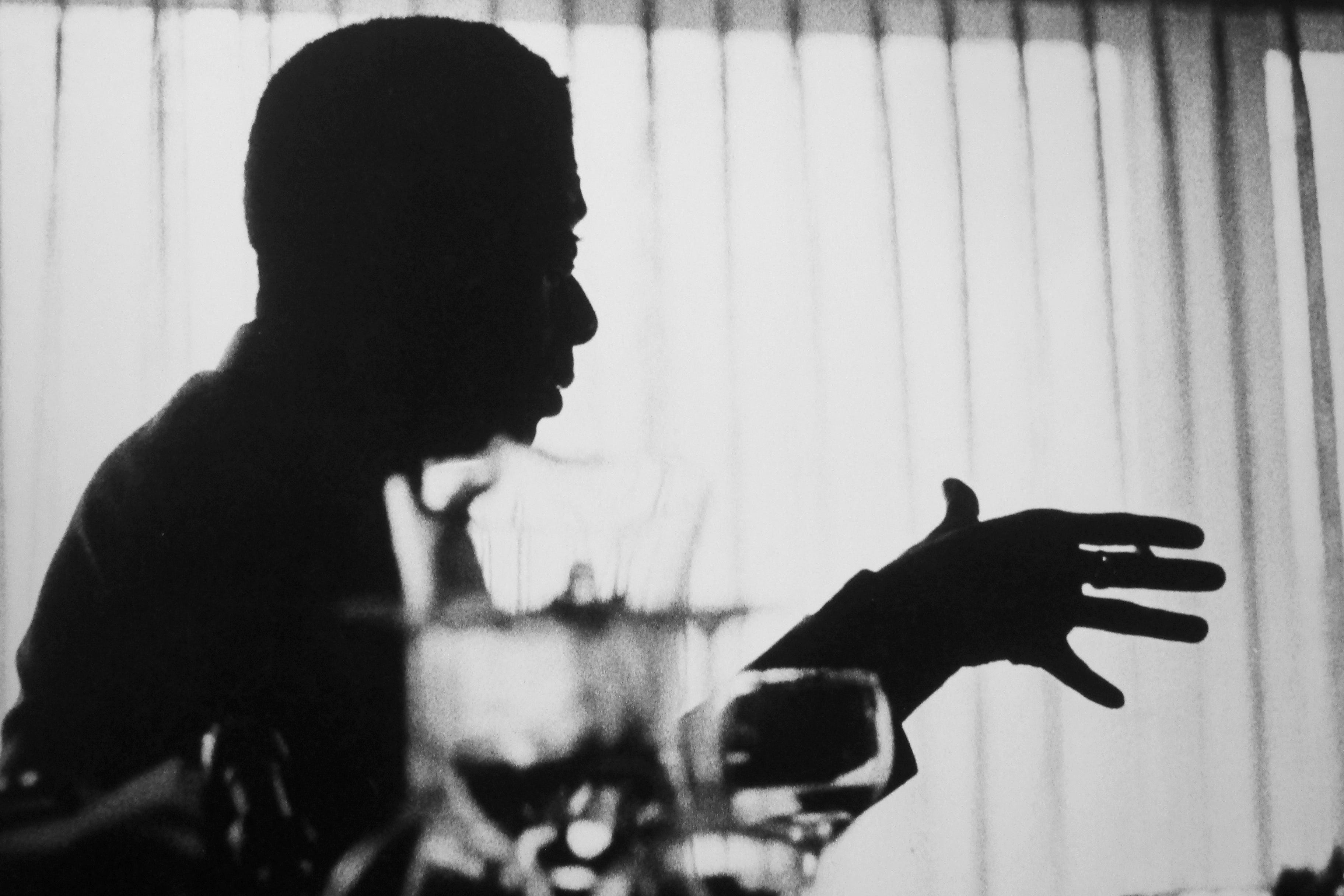
I wrote this piece last weekend, before the New Yorker published Louis Menand’s new essay, which explores similar themes.
Andrea Long Chu has published a takedown of Thomas Chatterton Williams. Though it’s pegged as a review of a recent book of his, I find it highly reminiscent of her recent anti-Pamela Paul piece in that I have to believe both were written in like 2022 and fished out of the old Dropbox as a classic “it’s summer and too hot to write” work-avoidance tactic. I respect the hustle, but not the result, especially because this new missive commits one of the most cliched and tiresome acts in liberal journaling: attempting to shanghai James Baldwin into the contemporary social justice movement, which he would have hated. Chu’s invocation of Baldwin is fairly anodyne, and I don’t particularly hold it against her. But I was TRIGGERED by it, and it inspired me to make a case that I’ve thought about making for years: James Baldwin wasn’t woke. I hate to use the term, I know we’re all sick of it, but I can’t think of a simpler or more direct way to say it. I’m thrilled Baldwin has gotten his flowers lately, but that has come packaged with a reductive view of his values that would have left him aghast.
Since the rise of today's social‑justice framework, with its identitarian categories, organizational commitments, and doctrinal vocabularies, Baldwin has often been summoned as a standard-bearer: a Black queer intellectual, a civil‑rights martyr, an anti-racist template. This would likely have shocked one of Baldwin’s contemporaries, and I think this entire appropriation fundamentally misrepresents him. Not only did he neither seek to be a mouthpiece for any movement nor ask to be neatly labeled, he was famously, tempestuously resistant to that sort of effort. Indeed, his brilliance lay in refusing those neat frames - critiquing identity as an ideological project and resisting reductionism, demanding moral improvisation, forging his own center. This of course does not mean that his work can’t be consulted or invoked in the struggle to define the next era of human consciousness, but then that is the essential distinction: to engage with Baldwin’s work, his fractious and uncategorizable and occasionally quite conservative work, rather than to embrace the effigy that has been made of him on social media by people who don’t read. Ultimately this is for the best even for the social justice set; Baldwin’s refusal to surrender to categorization makes him far more valuable than any activist gatekeeper might imagine.
From early in his career, Baldwin rejected “identities” as primary truths. In his essay “Everybody’s Protest Novel,” originally published in Notes on a Native Son, he criticizes the compulsion to categorize life into neat formulas, warning that “the passion for categorization… often moves us further from the truth.” It’s hard to think of a process more central to modern identity politics than the kind of categorization Baldwin derides in his essay. The first step in the identitarian process is to assign the various actors in any perceived political conflict to predigested roles based on our crude metrics of who is more or less oppressed. The very concepts of “the marginalized” or “dominant groups” or similar are necessarily reductive in the manner that Baldwin critiques, because they assume simplicity precisely where he spent a career injecting complexity. Absolutely central to Baldwin’s basic ethos was his rejection of the idea that his status as a Black gay man could be reduced to those attributes individually or collectively or to any combination of others. And yet he’s constantly forced into political frames that assume just that simplicity. It’s intellectual violence, posthumous intellectual violence that the victim can’t resist.
In that essay, Baldwin criticizes the work of Daniel Guérin, an influential French anarcho-communist writer. Guérin epitomized the kind of doctrinaire thinking that Baldwin found so frustrating, the escape into theory that necessarily bled analysis of individual complexity. As Baldwin writes, “A man whose vision of the world remains as elementary as Mr. Guérin’s can scarcely be trusted to help us understand it.” The word “elementary” here should be understood to be quite pregnant, as Guérin was a theorist who wrote many technical political tracts that could hardly be seen as simple. But to Baldwin, his work was elementary in that it insisted on categorization of human beings as a core theoretical move, a tendency which in Baldwin’s view could not accommodate all of the immense messiness of human affairs. This was particularly frustrating for Baldwin because Guérin was an influential figure in the proto-LGBTQ movement, and his insistence on forcing queer identities into the straightjacket of ( Guérin’s version of) Marxist orthodoxy violated Baldwin’s sense of sexual and romantic possibility.
Guérin first wrote “Negroes on the March” as an essay in the late 1940s and then expanded it into a short book titled Where Are the American People Going?, published in 1956. Baldwin reviewed the book for The Nation, derisively. He saw in it exactly the kind of economic reductionism that would become the subject of so much socialist vs. antiracist angst in the 21st century; Guérin, at least, was surely guilty. I’ve only read brief excerpts of his book, but there’s no question that it keeps casting racial discrimination as merely an expression of class struggle, which is neither good analysis nor good politics. (It didn’t help that Guérin claimed to have “read everything of importance” on the issue of American civil rights.) Part of the divide can be chalked up to Baldwin’s classic refusal to slot neatly into any preexisting political category; he was deeply influenced by the flourishing of communist ideas in Harlem during the Great Depression, particularly the work of Claude McKay, but he was far from a doctrinaire Marxist, and his work was sprinkled with anarchist sympathies that did not fit comfortably with the beliefs of someone like Guérin. Baldwin distrusted political programs that promised utopia by replacing one ruling elite with another, warning that human corruption and cruelty are not eliminated simply by changing economic systems. It didn’t matter to Baldwin whether that elite called itself the voice of the proletariat.
In the “Autobiographical Note” from the same collection, Baldwin says “I think all theories are suspect, that the finest principles may have to be modified, or may even be pulverized by the demands of life, and that one must find, therefore, one’s own moral center and move through the world hoping that this center will guide one alright.” It’s difficult for me to think of an attitude less suited to how social justice politics spread in the first decades of the 21st century - as memes, passing from one person to another undigested, spreading in the form of readymade arguments designed to enforce liberal consensus. Of course Baldwin aligned with modern social justice activists on many specific questions, although he also deviated from them in more ways than they’d assume. But the bullying logic of political conversion through social pressure violates all of his values.
Baldwin’s problem with ideology was not merely epistemological, but also moral; he believed that rigid categories rob individuals of moral agency and impose top‑down identities that mask complexity. Whether confronted with leftist or rightist thought, he remained critical. Though he was perpetually dissatisfied with the parts of the civil rights struggle that he saw as accommodationist, his scorn also extended to racial separatism: though he understood its appeal, he believed it mirrored white supremacy’s obsession with race-based identity and ultimately trapped the very people it claimed to liberate. This can be seen in his lifelong refusal to sort himself into the reductive “King vs. X” binary that has often been imposed on the civil rights moment by modern essayists; his discomfort fell on both the more incrementalist approach that arose from the Black Baptist tradition and the radical flavors of the Black Power era.
Baldwin never identified as a civil‑rights activist at all, refusing even that label despite his immense influence in the movement. In a 1964 interview, he rejected the idea that the civil‑rights struggle was a revolution in anything like conventional terms. Indeed, he cast that idea in ironic relief in referring to the civil rights struggle as a “peculiar kind of revolution” aiming to shift American life for every citizen, not only Black people. He aligned with Malcolm X’s insistence that as citizens, African Americans should not have to fight for civil rights; citizenship should already include them. Yet he avoided adopting the Nation of Islam and its form of separatism, which hampered X and his project for most of his political career. (A movement married to Yakub theory is bound to have a certain ceiling when it comes to recruitment.) In general, he resisted being drafted into various new permutations of escalating Black radicalism. For one thing, he saw Black militancy as a trap of ideology like any other and had enough bruising arguments with self-styled Black radicals to have experienced that trap firsthand. For another, he was a voracious consumer of people, of other human beings, and no doubt rejected separatism because he wanted to maintain access to the various white people who he took as interlocuters, friends, and lovers.
Obviously, it’s not for no reason that Baldwin has frequently proven to be an attractive source of inspiration for the social justice set. His overall concerns with racism, inequality, and resistance to both aligns well with the rhetoric of social justice politics. It’s not hard to see the appeal of shaving off his texture and inserting him into your political project; he had a talent for aphorism and sought justice in a way that became deeply popular in academic leftist politics, which is to say, with a strange combination of revolutionary fervor and self-defeating pessimism. Yet Baldwin could not be mistaken for your average Twitter activist. In the renowned 1965 Baldwin–Buckley debate at Cambridge, Baldwin electrified the audience by refusing to treat white people monolithically. He argued against a simplistic integrationist vision, saying, “I cannot accept the proposition that the four‑hundred‑year travail of the American Negro should result merely in his attainment of the present level of the American civilization” - that is to say, equality with white America was not sufficient when white America itself was so riven with debilitating inequality. Integration into a “burning house” was no progress. He insisted that America needed transformation, radical shifts not just for Black people but for the entire society. The audience, which had likely expected debate rigged toward ideological point-scoring, instead got a sermon on moral consciousness: the oppression of Black people was not merely their burden but a facet of America’s larger unresolved nightmare.
The category that made the most sense to Baldwin, and which most pervaded his work, was of course the category of Black, and in a world in which Black was a formal legal status that involved the abrogation of many fundamental rights, no one could ignore that particular category. In The Fire Next Time, Baldwin makes this explicit, saying “You were born where you were born…and faced the future…because you were Black and for no other reason.” But he goes on to insist that the enlightened person’s response must transcend racial grievance; to secure justice, one must convert anger into broader empathy. Racism must be faced honestly, yet the ultimate horizon remains collective liberation. And I think that anyone who said on lefty Twitter in May of 2020 “Racial justice can only come through the collective liberation of all people from all forms of structural oppression” would be subject to days of anguished criticism for saying so.
Literarily, Baldwin insisted on the primacy of human individuality and moral improvisation. His essays, novels, and letters sought to reveal human complexity rather than mobilize readers into identity-based solidarity. At root, Baldwin held “your suffering does not isolate you”; rather, it can be “your bridge” to others. Again, this is an uneasy fit with our current era, where literary character seems forever secondary to the burdens of identity and disability that (the fashion holds) is more powerful than all that mushy empathy stuff. His identifying characteristics as a Black gay man informed his work, but he deliberately resisted these identities becoming mere identity narratives. Just about every biographer of Baldwin has noted that his relationships defied traditional labels of romantic ownership, and his lifelong habit of collecting interesting people into his own personal menagerie both provided the material support that enabled him to live independently and helped inspire his rejection of conventional political strictures. It’s hard to think of an artist who drew more sustenance (of all kinds) from emotional and ideological profligacy.
In The Devil Finds Work, his book-length essay on film and film criticism, he writes that “an identity is questioned only when it is menaced… Identity would seem to be the garment with which one covers the nakedness of the self.” Identity, in this way of thinking, is defensive rather than generative, and it obscures the true being underneath rather than defines it. Again, here I find a straightforward rejection of the reductionism that animates modern social justice theory. Baldwin didn’t seek protection under group identity; he sought moral clarity in a world bent on illusions. Unsurprisingly, then, he also refused to let protest literature claim to represent Black life. In Notes of a Native Son, he critiques both Richard Wright (his onetime mentor turned frenemy) and Harriet Beecher Stowe for reducing Black people to simplistic archetypes, thus reinforcing prejudice rather than dismantling it. And this antipathy worked the other way around, too; Baldwin hated using politics to judge the merits of a piece of art. That attitude could hardly be more contrary to the way political critique of art functioned in the social justice 2010s, where you couldn’t read any publication of note without finding an essay of the type “This movie/show/song is patriarchal/ heteronormative/ etc, and therefore Bad.”
Throughout his life, Baldwin expressed a kind of defiantly existential approach to modern living. In his last interview, from 1987, he said “I was not born to be what someone said I was. I was not born to be defined by someone else, but by myself, and myself only.” His life in France exemplified that refusal. He fled America in 1948 to escape being “merely a Negro,” only to discover in Paris that he was unmistakably if grudgingly American, and judged largely as such. Again, the urge to categorize haunted him wherever he went. Yet he refused the expatriate identity too. Baldwin remained American in citizenship and (for lack of a better word) confrontational style, and he declined opportunities to use his exile to define himself as something other than American even as his moral critique remained directed at the United States.
Baldwin insisted on speaking truth across publics - to the racist establishment, to Black activists, to white liberals, to Americans of color, to policymakers - on his own terms. Modern movements are ideological, with litmus tests. Baldwin spent his life diagnosing that moral and ideological habit, not participating in it. He argued that civil‑rights and Black Power alike could become ideological cages. His moral authority rested on his refusal to partake in them as allegiance systems. Social justice discourse often privileges symbolic representation over the psychological and spiritual complexity that were his singular focus, his obsession. And so on, and so on, and so on.
Baldwin’s work delves into America’s collective soul, excavating the persistence of sin, guilt, betrayal, love, hope, all dimensions social‑justice framing often omits in its zeal to speak simple truth to establishment power. Readers who nominate Baldwin as a singular Black liberation icon often erase his insistence on universal humanity. He never wrote for Blackness alone; he wrote for all who hungered for moral confession and its transformative potential. Baldwin offered existential hazards, not organizing blueprints. Focusing on Black liberation alone misses his broader interrogation of America as a moral project. Despite movements trying to absorb or claim him, Baldwin is more alive today as a moral provocateur, someone who asks deep questions rather than supplying talking points. He insisted that “Freedom is something people take, and people are as free as they want to be,” a stance readymade to be ripped from its context and tweeted out with both anger and disingenuity. But his whole life was a lesson in how literal that claim can be: he took his own freedom, in a world that sought to impose identities on him, and he did so in defiance of racism, of reductive radical politics, of everyone and everything.
Reading The Fire Next Time was a transformative experience. It's remarkable that a piece that originated as a letter to an individual relation speaks so universally, with all humanity as its audience.
I find it remarkably liberating, next to a world that for much of my life has seemed obsessed with Balkanizing the human experience into distinct and un-relatable identitarian chunks, that Baldwin did not ground his message in being "for" a particular group.
One of the hallmarks of the 2010's anti-racism movement was the register of "white people are incapable of understanding what it is like to be black", with its inverse of "black people in America are incapable of feeling true freedom or even comfort or safety". As I am inclined to be generous towards those with whom I mostly agree, politically, I believe the intent behind these concepts was initially to ask people to open their minds to the possibility that some people have radically different experiences of what life is like, even people in our own communities. And I think this is a good and necessary goal for anyone to the left of King Louis XIV, to broaden one's view of humanity. But to be clear, that is my gloss on it - that is not the text.
In the rush to insist that white people are privileged by institutional racism, the social justice register alienated human beings from one another, rather than building the solidarity we would actually need to win. I think in particular of a 2007 episode of South Park - hardly an ideologically rigid show itself - in which Stan Marsh, in confronting the legacy of the N word, tells Token that he doesn't get what it's like to be black and he never will.
What kind of message is that, exactly? "You two are irreconcilably different. Now be good to each other!"
More than morally offensive, I find it intellectually weak. It conflates experience, understanding, and identity in a way that corrodes the discourse. Of course no one individual can ever fully understand any other individual - that's what being human is like - but to say that I cannot understand what it means to be black both reduces blackness to a monolith and also undercuts the necessity of all these racial sensitivity trainings, among other things. If mutual understanding is impossible, then so is integration, and separatism is really the answer... and suddenly we are starting to sound like a certain 20th century Teutonic political movement.
What does it mean to be black? Stripped of the complexities of the individual, we are simply referring to an artificial social relation given to us by our ugly history. And that is something that can be understood by anyone willing to understand it, even if it is not a universal experience.
I do not totally 100% understand what it's like to be any individual black person, in much the same way I can never totally 100% understand what it's like to be anyone but the person I am. But I know what unfairness feels like. I understand that prejudice is wrong, and I have learned how certain prejudices became deeply entrenched in our society and our culture. In sum - I understand what it means to be human. To me, that is what Bladwin's work - and the work of so many other great writers - appeals to: the human being in all of us.
"there's a kind of violence in posthumously drafting a man famously resistant to joining anything into your political movement"
No there isn't. Please don't join in the weird watering down of the word 'violence' to mean "thing I don't like".